
Where Do The Rules For Wearing a Kilt Come From?
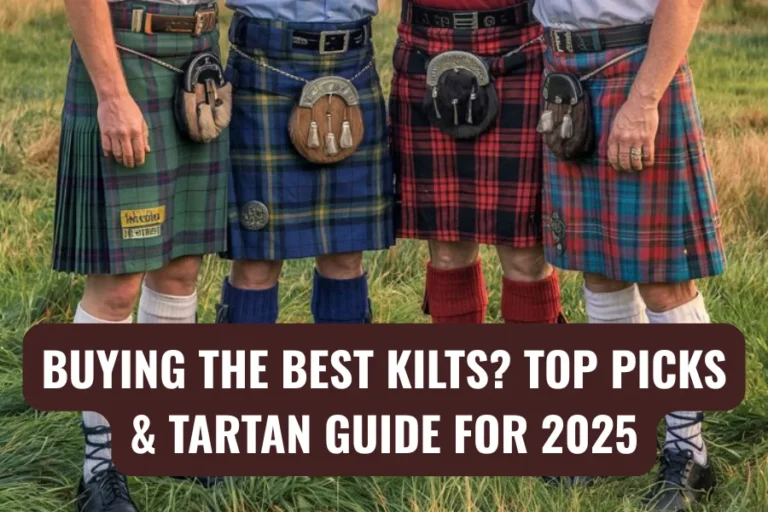
For many men, the first time wearing a kilt comes with a list of instructions: how long it should be, where the sporran should sit, how high the socks should reach, and which shoes are appropriate. Yet the kilt began as a practical garment worn by people who had far more urgent concerns than regulation sporran height. So how did a working piece of Highland clothing become an outfit surrounded by so many rules?
The kilt is perhaps the most recognisable item of Scottish clothing, and it remains widely worn. One commonly cited figure suggests that around 74% of Scottish men have worn one. For many, the first experience comes in childhood, when nobody thinks to hand over a rule book. It is often only years later, when hiring a kilt for a wedding, that strict expectations suddenly appear for every detail of the outfit.
The Original Highland Garment: The Great Kilt
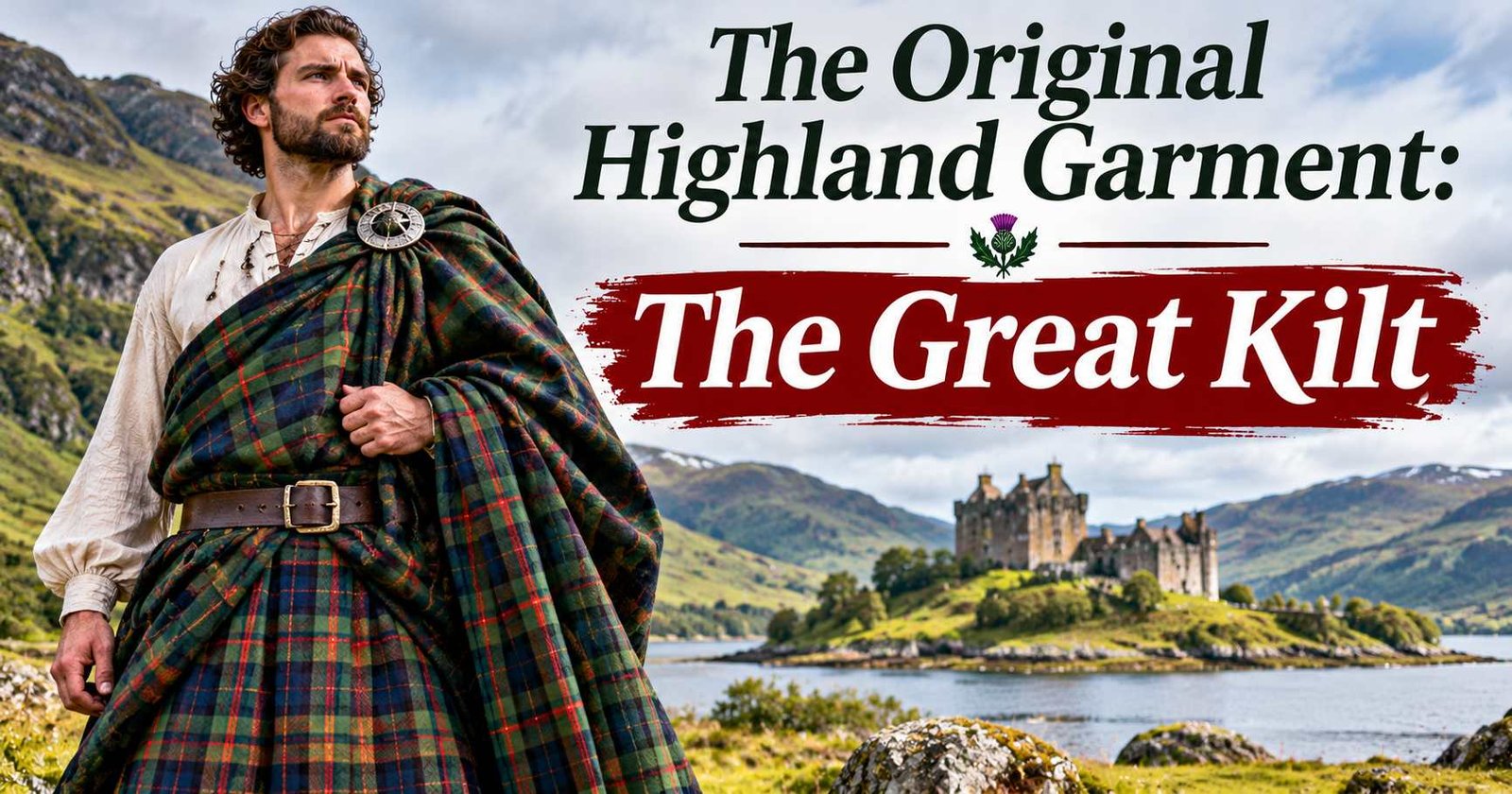
The earliest Highland kilt was nothing like the neat, tailored garment seen today. It was known as the féileadh mòr, or “the great cloth.” This was a long length of woollen cloth, gathered into folds and belted around the waist, with the upper portion wrapped over the shoulder.
It served several purposes at once. It was clothing, a cloak and, when needed, a blanket. That versatility suited those moving cattle across the Highlands in the seventeenth century, long before the region’s cottages were converted into holiday accommodation. There were no sewn-in pleats. The wearer arranged the cloth by hand.
The Origins of The Short Kilt:
The modern short kilt, the féileadh beag or “little kilt,” is often linked to Thomas Rawlinson, an English industrialist in the eighteenth century. According to the popular story, he wanted his Highland workers to have less cumbersome clothing for working around machinery in a furnace, so the lower portion of the great plaid was separated from the upper part.
This account is not without dispute. While Rawlinson may have encouraged the use of the shorter garment, some argue that people had already begun adopting this more practical option slightly earlier. Whatever the precise origin, the story shows how the kilt continued to evolve to suit the needs of those who wore it.
The Ban on Highland Dress:
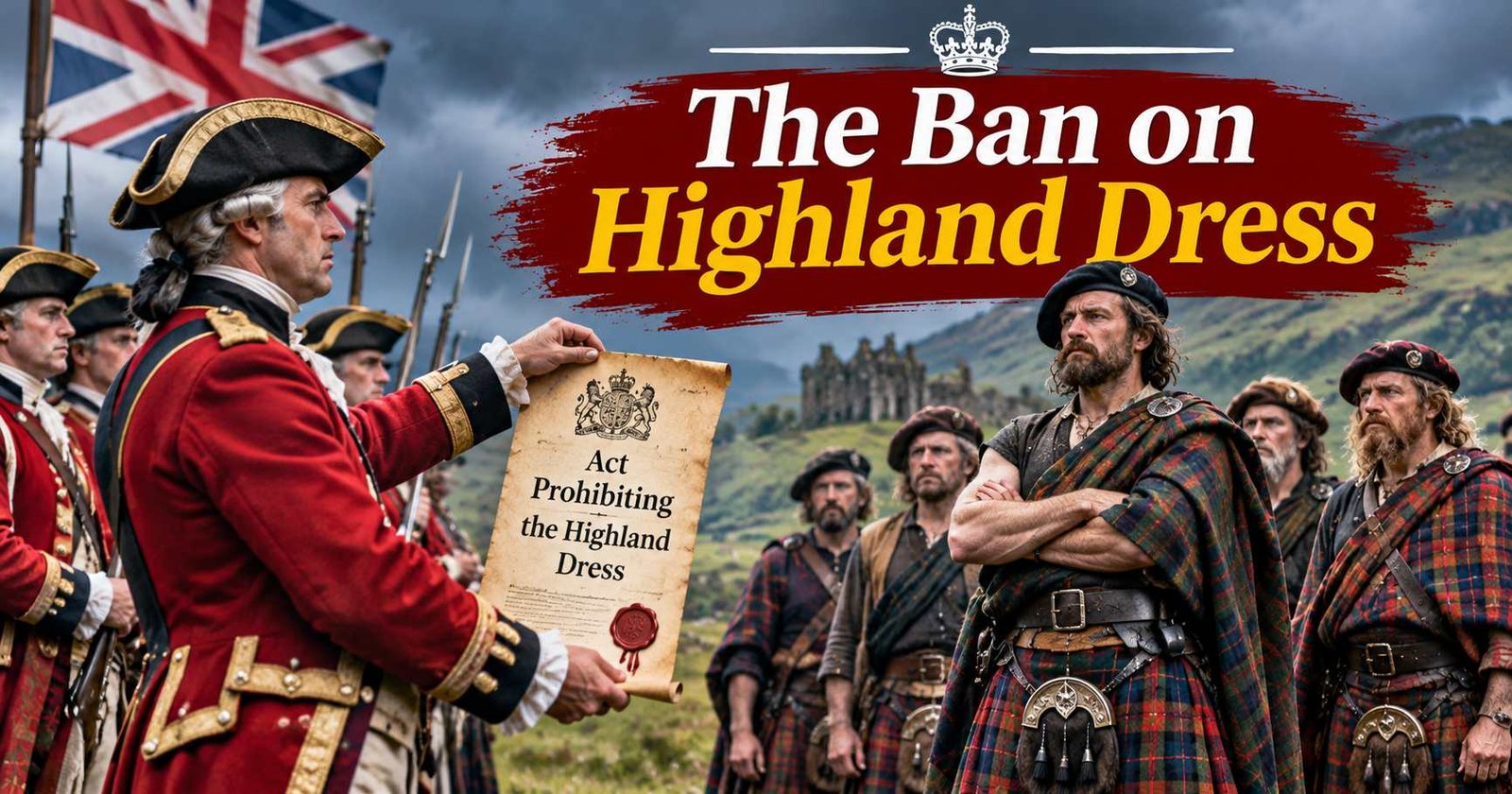
The kilt’s history changed after the 1745 Jacobite uprising led by Bonnie Prince Charlie. Afterwards, the British government sought to break the military and cultural power of the Highlands. In 1746, Parliament passed a law banning Highland dress.
For ordinary men and boys in Scotland, wearing either the great kilt or the little kilt could mean serious punishment. The exception was service as a soldier in one of His Majesty’s Highland regiments. This created a notable irony: while the government suppressed Highland dress among civilians, it relied on that same dress to attract Highlanders into the regiments, and those regiments helped keep the tradition alive.
How Uniformity Led To Rules:
Armies value uniformity, and military use of the kilt brought consistency, regularity and standardisation. The garment began a gradual shift from something a Highlander arranged for himself to something others arranged for him.
After 1782, when restrictions on civilians wearing Highland dress were repealed, the process continued through several channels:
- Walter Scott organised a Highland pageant for the visit of George IV.
- Highland societies and enterprising individuals began suggesting standardised patterns.
- Tailors took over the role of rule-makers from the military.
Commercial Influences on Kilt Etiquette:
Commerce also played a part. Commercial weavers developed ways to sell tartan cloth, including fixed designs and family tartans, along with the idea that a customer needed one version for dress occasions and another for hunting. These additional conventions were not aimed at diminishing Highland culture. Their purpose was to increase sales.
Wearing a Kilt Today:
Many of the rules attached to the kilt today therefore have mixed origins. Some arose from efforts to suppress Highland culture and impose conformity, while others were created to benefit someone’s business. That is worth remembering the next time someone insists there is only one correct way to wear a kilt.
A reasonable takeaway is that nobody should feel obliged to follow every rule, although even that, as with most kilt etiquette, is not a hard and fast rule.