
Did Highlanders Wear Underwear? The History Behind The “True Scotsman” Myth
Few questions are put to a man in a kilt as often as this one: what is worn underneath? The idea that a “true Scotsman” wears nothing under his kilt has spread around the world, and it can come from people who know very little about Scottish history. Behind the joke is a more interesting story about how Highland clothing evolved, how it was used and even how hard it is to sew a durable pair of trousers.
The Meaning of “True Scotsman”
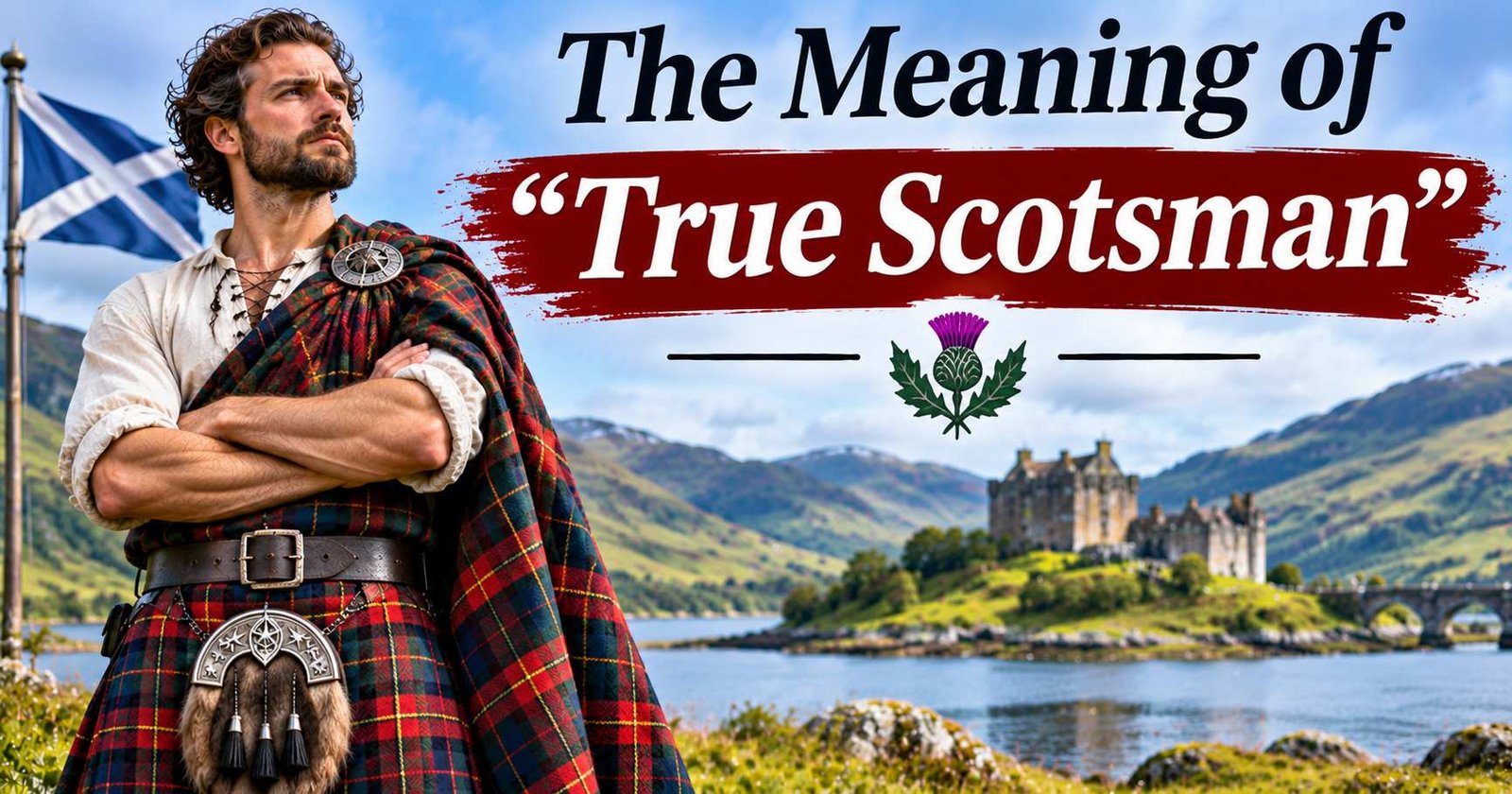
In Scotland, the phrase “true Scotsman” is a familiar one. It essentially means that anyone wearing underwear beneath a kilt is not a real Scotsman. Many people who grew up in Scotland hear it at weddings, ceilidhs and other occasions when the kilt comes out, and few stop to ask where it came from.
The expectation has not entirely disappeared from formal settings. In Scottish regiments, where the kilt remains part of ceremonial dress, the subject is still taken seriously, and sergeants have been known to insist that nothing is worn beneath it, sometimes even checking.
Highland Dress Before The Kilt as We Know It
To find the origins of the myth, it helps to look at the period between the 12th and 15th centuries, known as the Lordship of the Isles. It was a flourishing and economically prosperous time in the Scottish Highlands. The Lordship collapsed at the end of the 15th century, and it was after this that the great kilt began to evolve, into the 16th century.
The great kilt was a large, multifunctional blanket-like garment that was simple and easy to make. It is possible that its development was a response to the poverty and economic decline that followed the Lordship’s collapse, though this is speculation.
Highland Mercenaries in Europe
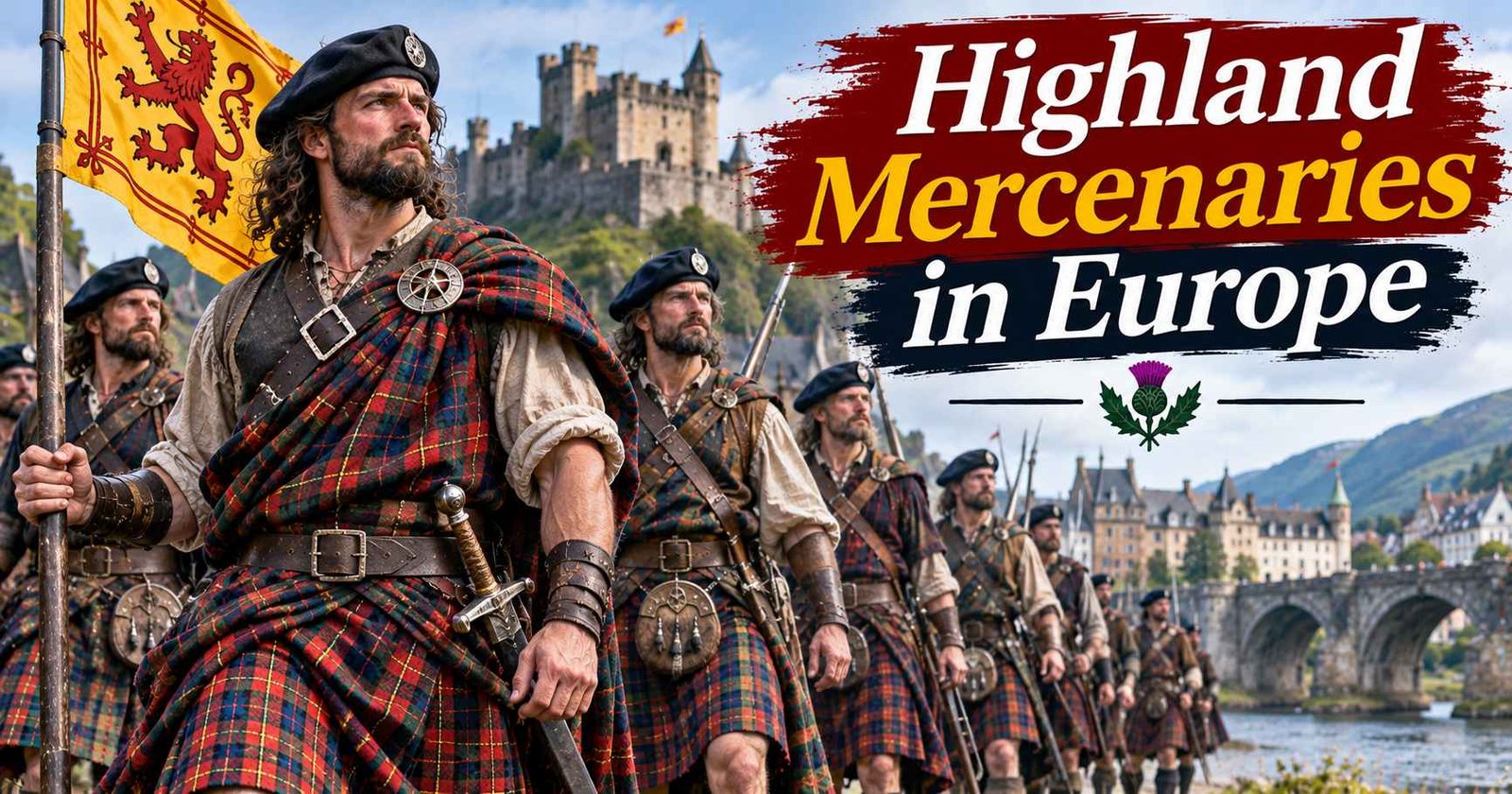
The first illustrations of Highland dress date from 1631, during the Thirty Years’ War, when the King of Sweden hired 800 Highland mercenaries. Their clothing was so different from what everyone else in Europe wore that it caught the eye of a German illustrator. In his drawings, each man wears his plaid and Highland dress a little differently. Some wear breeches or trews, while others go bare-legged.
This may be the point at which the novelty of the kilt first reached the European imagination, carried by Highland soldiers travelling the continent in such unusual clothing.
Early Written Clues
Martin Martin, 1680s
One of the best descriptions of the Highlands in this period is A Description of the Western Islands by Martin Martin. A Gaelic speaker and native of the Isle of Skye, Martin wrote in a matter-of-fact, unjudgemental way.
He describes the plaid worn by men as being made of fine wool, tied at the breast with a bodkin of bone or wood and belted at the middle with leather. It was pleated from the belt to the knee. He also notes that this dress was much easier and lighter for men on foot than breeches or trews.
Martin says nothing directly about what was worn underneath. However, his remark that men travelling on foot preferred the plaid to breeches or trews suggests they were not wearing trousers of any kind beneath it. There are also hints from the period of very long linen shirts, which at least covered the groin area. There is no clear answer yet, but there is a sign that people did not like wearing trousers when travelling on foot.
Edmund Burt, 1720s
The second clue comes from Letters from the North of Scotland by Edmund Burt. Unlike Martin, Burt was a British officer and an outsider, and he was something of a snob. He found the everyday dress of ordinary Highlanders unpleasing to the eye. He described a small part of the plaid being set in folds and belted around the waist to form a short petticoat reaching about halfway down the thigh. He added that on a windy day, or when going uphill or stooping, the indecency of it was plainly discovered.
His observation hints that Highlanders were not completely covered beneath their kilts. It may be the beginning of the myth.
From The Great Kilt To The Small Kilt
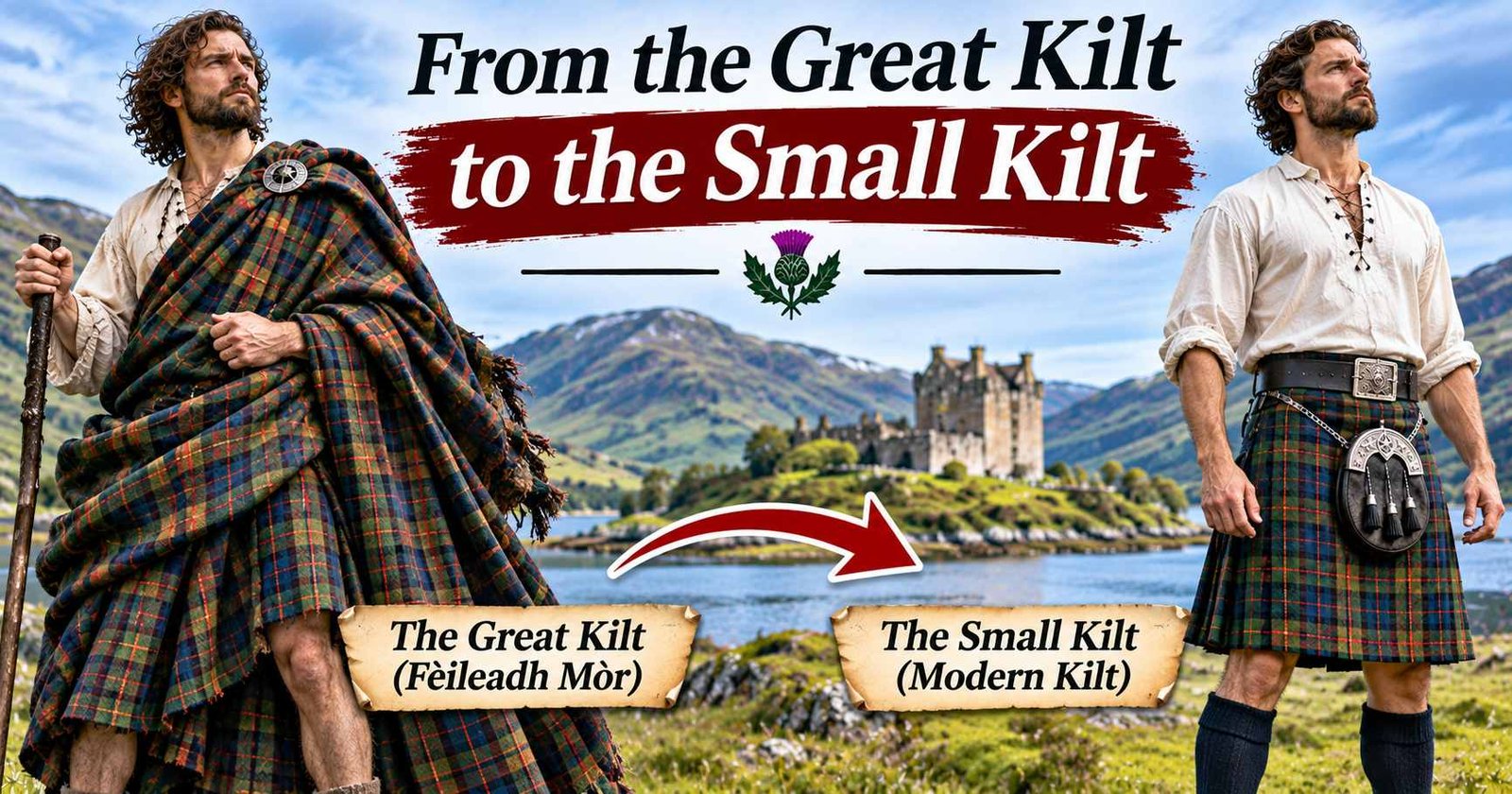
The next question is how the great kilt, the féileadh mòr, became the small kilt, the féileadh beag. The origin of the small kilt is still debated by scholars, but one popular story credits an Englishman, Thomas Rawlinson, an industrialist operating in the Highlands in the 1720s. According to an article published in the Edinburgh Magazine in 1785, Rawlinson thought the great kilt too cumbersome for his Highland workers. He removed the top half and kept the lower half, stitching it together to create the small kilt.
Others dispute this account. A map of Aberdeen created in 1661 includes a small illustration of a man wearing a féileadh beag, and some Jacobite rising songs that predate Rawlinson mention it in their lyrics. The small kilt may have been the work of several people, and nobody can say for certain who invented it.
Whether or not the story is true, it represents an important shift in Scottish history: a change from pastoralism, spending time outdoors herding and living with cattle, to industrialism, working indoors in a factory.
Culloden, The Disarming Act and The Highland Regiments
The Battle of Culloden in 1746, in which the Jacobites were defeated, brought one of the events that changed Highland history forever. Immediately afterwards came the Disarming Act, through which the British government essentially made it illegal to speak Gaelic, wear Highland dress and carry weapons. The ban on Highland dress did not last long, but it did lasting damage. It marked the beginning of the end of the great kilt and the rise of the small kilt.
The small kilt also became more widely seen through the creation of Highland regiments in the British Army. This was partly a deliberate effort to round up troublesome young Highland men and send them off to serve the empire. It was also the beginning of a more unified Scottish identity. The small kilt acted as a happy medium between different languages and peoples of Scotland. It was less Gaelic and less associated with the old ways than the great kilt, yet not as lowland and English as trousers.
The Origins of The “No Underwear” Myth
It is in this setting, with Scottish regiments fighting across Europe for the empire, that the origin of the “true Scotsman” idea seems to lie. The earliest known reference to Scots going without underwear appears to be a French satirical illustration from 1815. It shows French women pretending to tie their shoelaces as they lift the kilts of Scottish soldiers while buying eggs. Several versions of the image circulated around that time, and the early 1800s seems to be when the myth began.
Army practice may have played a part too. The British Army of the 1800s was very strict about uniform, and everything had to be exactly the same. Some units probably had very strict officers, and underwear may or may not have been worn depending on the unit, but the aim was uniformity.
The myth appears to have started with French cartoonists poking fun at the Highland regiments, and it has lingered ever since, into the 21st century. Whether people wear underwear today depends largely on what they are doing. During active events such as the Highland Games or backhold wrestling, most people wear it, since otherwise the event would be almost total nudity. Still, the mystery of what lies beneath keeps its appeal, rather like the Loch Ness Monster, and the many romantic novels about men in kilts have probably not helped.
Did Highlanders Really Go Without?
As a blanket claim about the 17th and early 18th centuries, the “true Scotsman” idea does not hold up. There was not yet a unified Scottish identity. Highlanders probably would not have thought of themselves as Scotsmen. They would instead have identified as Gaelic speakers, the Gàidheil, or with their particular clan and region. Lowlanders mainly wore breeches and trousers and tended to regard Highlanders as somewhat barbarous neighbours, seeing themselves as more civilised and progressive.
Martin’s observation that people travelling on foot preferred to go without breeches or trousers still deserves attention, and there are practical reasons for it.
- Terrain. The Highlands are covered in rough ground, often with high heather and rocky hillsides, so the legs need to be lifted high. Before the arrival of elastic, all breeches and trousers had to be sewn, and making trousers that do not split at the crotch is difficult, especially with historical techniques. Even today, only a few modern outdoor brands manage it.
- Cost. People did wear breeches and trews, but they were generally more expensive, probably because trews that could withstand constant travel were hard to make. Some medieval undergarments resembled a loincloth, and some trews may have had legs that did not attach at the crotch but worked more like stockings, which avoids wear and tear because there is no fabric there.
- Warmth. The great kilt is a very large piece of fabric that is unwieldy and heavy, and it has to be wrapped around the body. That means carrying four to five metres of wool around the waist. This gets very warm, so consistent ventilation is welcome.
Experience of travelling and living for short periods in 17th-century-style clothing supports Martin’s view. Travelling in this kit can feel far more freeing than modern trousers, with remarkable freedom of movement. Linen or wool breeches are still useful once travellers stop, particularly when it turns cold or when the midges come out.
Taken together, the evidence suggests that some Highlanders travelling on foot probably did not wear underwear, simply because it was more practical. They likely did not make a big deal of it. Going without was just normal.
Should You Wear Underwear With a Kilt?
Today the choice is a personal one. Underwear can be nice, especially when biting insects are out, and it helps prevent chafing. It is also a little more hygienic. On the other hand, some people simply enjoy feeling the breeze.
As for how to respond when someone asks, a polite suggestion to mind one’s own business is perfectly reasonable.