
How To Choose The Right Tartan Kilt For Your Heritage Or Style
Tartan kilts are more than just clothing.
They reflect your roots, values, and personality.
Choosing the right one takes a little effort, but it’s worth it.
Let’s break down how you can find the perfect tartan kilt for your heritage or style.
Know The Basics
Before choosing a kilt, get familiar with a few key terms.
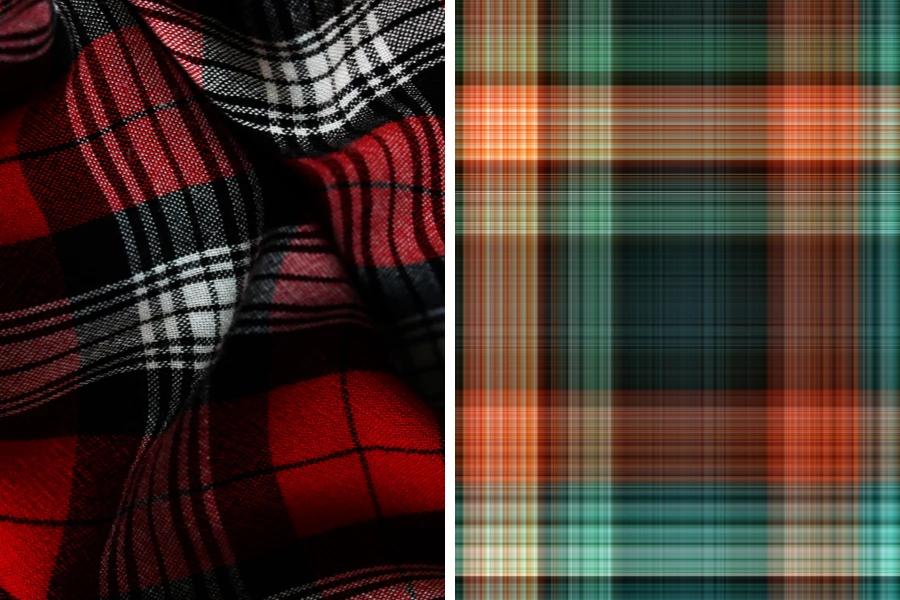
- Tartan: A pattern of crisscrossed lines, usually in multiple colors. Each tartan design often links to a Scottish clan, district, or region.
- Kilt: A knee-length skirt-like garment, traditionally worn by men in Scotland.
- Plaid: In North America, people often use this term interchangeably with tartan. In Scotland, plaid refers to a specific type of fabric or garment.
Understanding this will help you choose the right product when browsing tartan kilts for sale.
Start With Your Heritage
If you’re Scottish or have Scottish ancestry, look into your family’s clan.
Each clan has its own tartans, often with multiple variations—modern, ancient, hunting, and dress.
Here’s how to begin:
- Ask family members about your ancestry.
- Search for your surname in clan databases.
- Use tools from reputable Scottish registries.
Example:
If your surname is “MacDonald,” you might find multiple MacDonald tartans—each with slightly different color palettes and history.
If you’re not of Scottish heritage, no problem.
You can still wear a tartan that resonates with your style or values.
There are universal and regional tartans open to everyone.
Choose Between Traditional and Custom Tartan Kilts
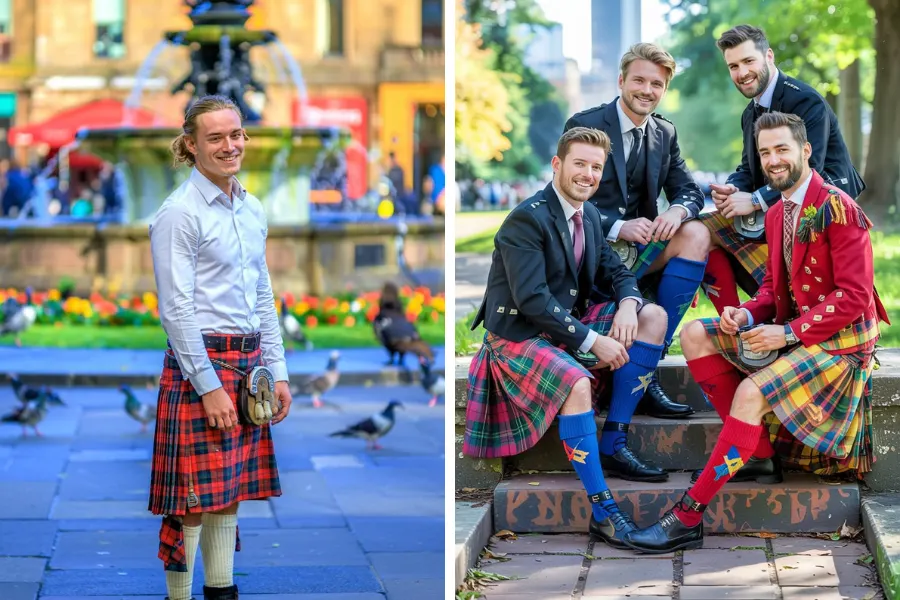
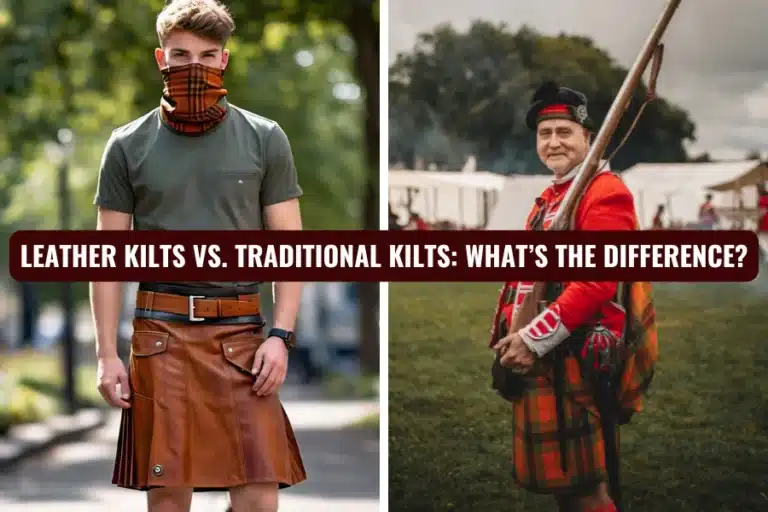
You have two main options: traditional or custom tartan kilts.
Traditional Tartans
- Connect to specific clans or regions.
- Follow historical color schemes and patterns.
- Ideal if you’re honoring family roots.
Custom Tartan Kilts
- Designed to reflect personal taste or unique identities.
- Great for modern events, clubs, or teams.
- Useful if you want something truly one-of-a-kind.
A custom kilt lets you design the fabric, pattern, and structure.
This is a smart route if you want to mix heritage with individuality.
Consider The Colors
Color choices in tartans have meaning and impact.
- Ancient Tartan: Uses muted, earthy tones. Looks softer and more faded.
- Modern Tartan: Rich, vibrant colors. Made with chemical dyes.
- Weathered Tartan: Aged, almost washed-out look. Mimics how fabric might fade over time.
- Hunting Tartan: Dark greens and browns. Traditionally worn for outdoor use.
- Dress Tartan: Often white-based. Used for formal occasions.
Ask yourself:
- Do you want to stand out or blend in?
- Is the kilt for daily wear or special events?
Choosing the right color style will help you find tartan kilts that suit both your heritage and your lifestyle.
Pick The Right Fabric Weight
Kilts come in different weights.
Each serves a different purpose.
- Lightweight (10-11 oz): Best for warm climates or casual use.
- Medium weight (12-13 oz): A versatile choice for most occasions.
- Heavyweight (15-16 oz): Holds pleats better and looks more structured. Preferred for formal settings.
If you’re buying a kilt online, make sure the seller clearly mentions the fabric weight.
Focus on The Details
Details matter when it comes to the fit and look of your kilt.
- Pleats: Most kilts have pleats in the back. Some pleat to the sett (matches the pattern), others pleat to the stripe.
- Length: A proper kilt should fall mid-knee.
- Waist Size: Measure around your true waist (above the hip bone).
A well-made plaid kilt should feel secure without being too tight.
If your body shape is non-standard, go for a made-to-measure option.
Look at The Occasion
Kilts aren’t just for Highland games or weddings.
They work in many settings—formal, casual, and in-between.
Everyday Wear
- Choose simple patterns and lightweight material.
- Pair with boots and a plain shirt.
Formal Events
- Go for a traditional tartan or dress tartan.
- Add a Prince Charlie jacket, sporran, and kilt hose.
Clan Gatherings or Festivals
- Wear your family tartan proudly.
- Include clan badges or crests if available.
Weddings or Ceremonies
- Stick with darker or richer patterns.
- Custom kilt options allow you to match wedding colors.
Match your tartan to the tone of the event.
This will ensure your look fits the moment without overdoing it.
Shop Smart
When searching for tartan kilts for sale, pay attention to the source.
- Check authenticity: Real Scottish tartans are registered and follow a standard.
- Read reviews: Past buyers often mention fit, quality, and service.
- Look for return policies: Especially important for custom kilt orders.
Trusted online shops often provide:
- Clear sizing guides
- Fabric descriptions
- Real photos of their products
Don’t fall for vague listings or poorly written product pages.
Think About Maintenance
Kilts aren’t like jeans.
They need care to last.
- Hang them on a kilt hanger after use.
- Avoid machine washing unless the label says it’s safe.
- Dry clean heavy wool kilts when necessary.
- Brush off lint or dirt with a clothing brush.
If you wear your kilt regularly, consider getting a second one.
This extends the life of each and gives you variety.
Don’t Rush The Decision
It’s easy to get overwhelmed by the number of tartans out there.
Take your time.
- Explore different clans if you’re eligible.
- Compare traditional vs. modern styles.
- Try different color sets if you’re not sure which fits you best.
Ask yourself:
- What story do I want my kilt to tell?
- Am I dressing for tradition, personal taste, or both?
The right kilt should make you feel comfortable, confident, and connected—whether that’s to your ancestry or to your own sense of style.
Final Thoughts
Choosing the right tartan kilt is personal.
There’s no one right answer for everyone.
You might care about family ties.
You might just love how it looks.
What matters is that your kilt feels right for you.
Explore your options.
Ask questions.
Take pride in the choice you make.
Whether you’re looking for tartan kilts for men, Scottish tartan kilts for sale, or designing a custom tartan kilt, there’s something out there that fits you—literally and culturally.