
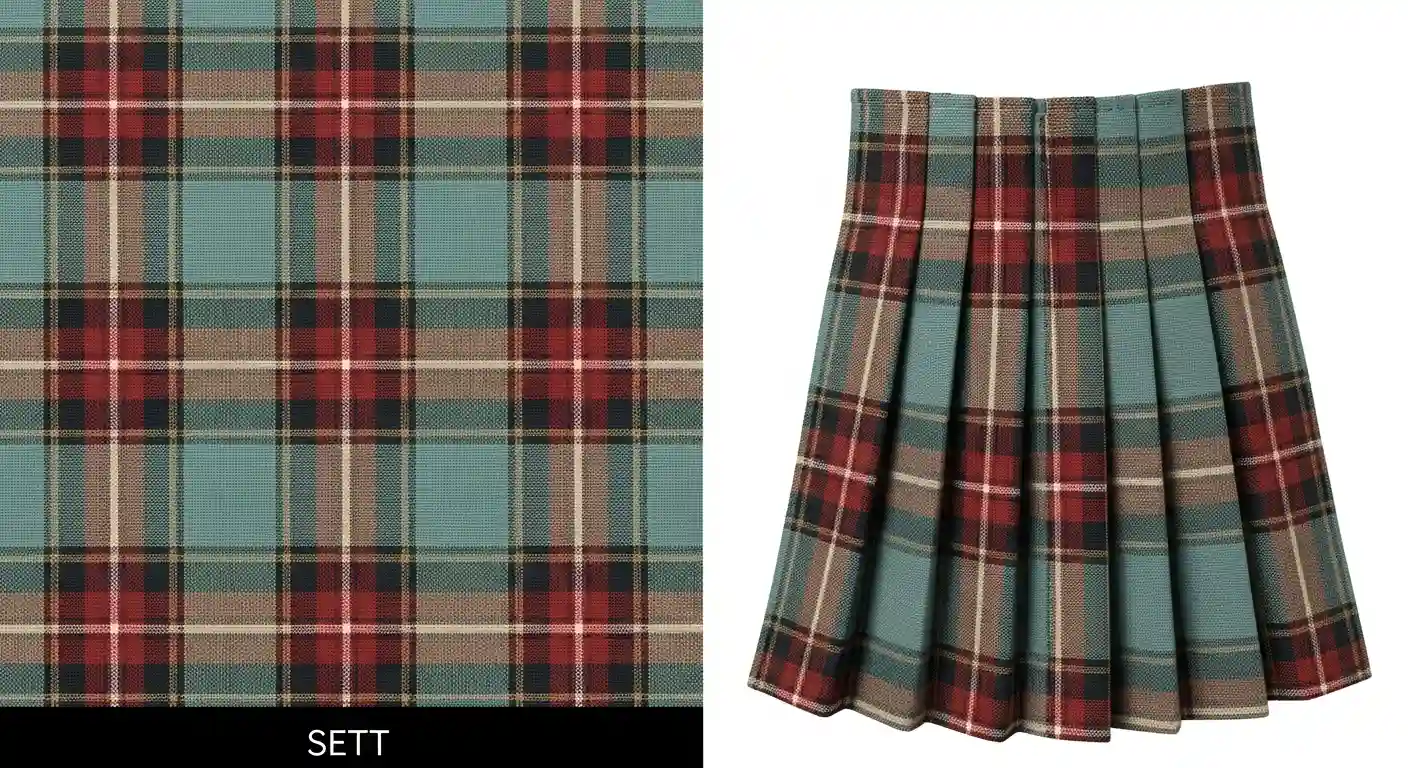
What is The Difference Between a Stripe Pleated Kilt and a Sett Kilt? A Complete Guide
When you first look at a kilt, you probably notice the tartan before anything else. The colors, the blocks, the lines. But once you turn it around and see the back, you might realize something you didn’t expect: not every kilt looks the same from behind. Some show repeating stripes. Others keep the full tartan layout. And this is where the difference between a stripe pleated kilt and a kilt pleated to the sett starts to make sense.
I remember the first time I actually paid attention to this. Someone showed me two kilts in the same tartan, side by side, and I kept thinking they couldn’t possibly be made from the same pattern. They were. It was only the pleating that changed everything.
A stripe pleated kilt focuses on one vertical stripe in the tartan. It could be a green line, a navy line, or whatever the sett gives you. Each pleat lines up on that same stripe, so the back of the kilt repeats the same vertical line again and again. It creates a tidy, almost measured look. Some people like that because it feels cleaner. There’s something predictable about it, and maybe that’s the point. If you want one feature of your tartan to stand out, this style does that without much effort.
A kilt pleated to the sett does something different. Each pleat repeats the entire pattern. So if your tartan has a large block with two thin color lines running through it, all of that shows in order across the back. The effect feels more like the front of the kilt simply wraps around. It keeps the tartan’s identity intact. I think many people prefer this because it feels more traditional, although preference really depends on what you want the kilt to express.
The difference becomes clearer when you imagine someone walking away from you. With stripe pleating, you see a straightforward series of lines, evenly spaced. With sett pleating, you see the whole story of the tartan. The blocks and intersections stay visible. Both are valid choices, and both say something a bit different.
There’s also the question of when you might choose one over the other. If you want the kilt to look formal or you want the tartan to remain recognizable from every angle, a kilt pleated to the sett might feel right. On the other hand, if you prefer sharper lines or a slightly more contemporary look, a stripe pleated kilt gives you that. Some military units lean toward stripe pleating, possibly because the uniform repeat looks consistent on parade. That’s not a rule, just something I’ve noticed.
One thing you might ask yourself is what you actually want people to notice. Do you want them to see the tartan in its full layout, or do you want their eye drawn to one specific stripe? It’s a small choice, but it changes the back of the kilt more than most people expect.
If you ever get the chance to compare two kilts of the same tartan but with different pleating styles, it’s worth a look. Even a quick glance can help you decide which one feels more “you.” And once you see the difference, you’ll never stop noticing it.
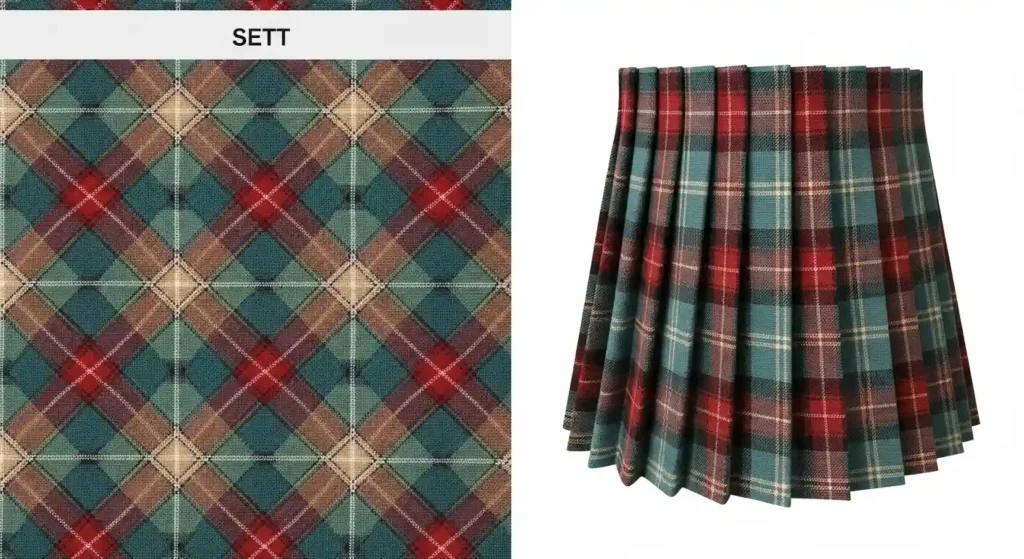
Here is The Clear Difference.
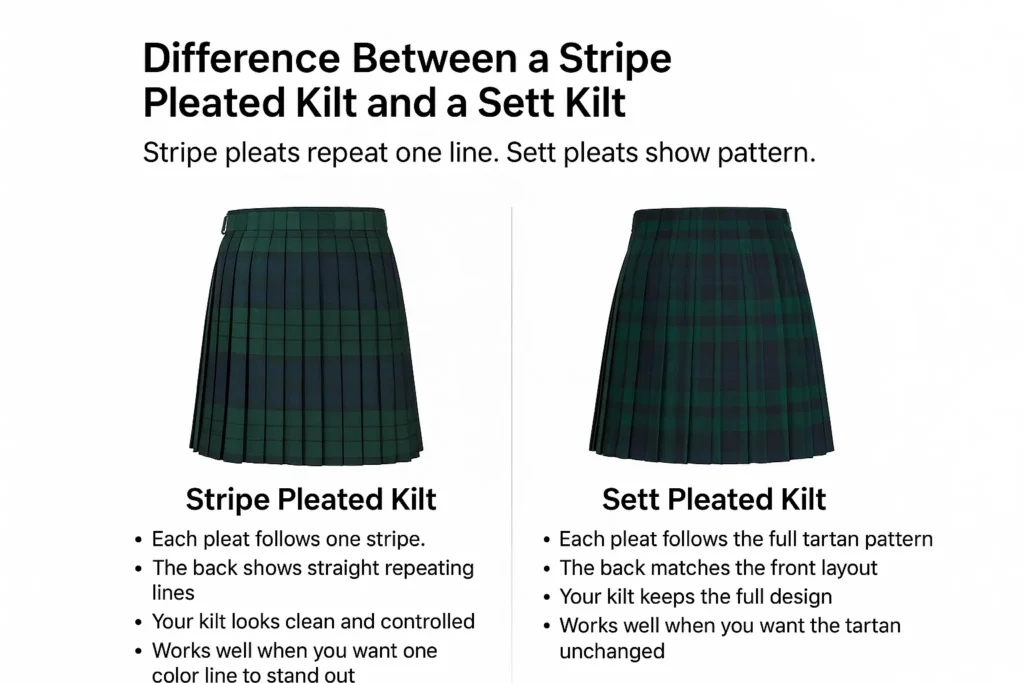
Stripe Pleated Kilt
• Each pleat highlights one vertical stripe in the tartan.
• The back of the kilt shows repeating straight lines.
• The look is bold and uniform.
• Good when you want sharp lines or want a specific stripe to stand out.
• Many modern kilts and military-style kilts use this look.
Sett Pleated Kilt
• Each pleat follows the full tartan pattern.
• The back of the kilt keeps the same layout you see on the front.
• The look feels balanced because the original sett repeats across the pleats.
• Good when you want your full tartan design to stay visible.
• Most traditional kilts use this style.
Key Difference
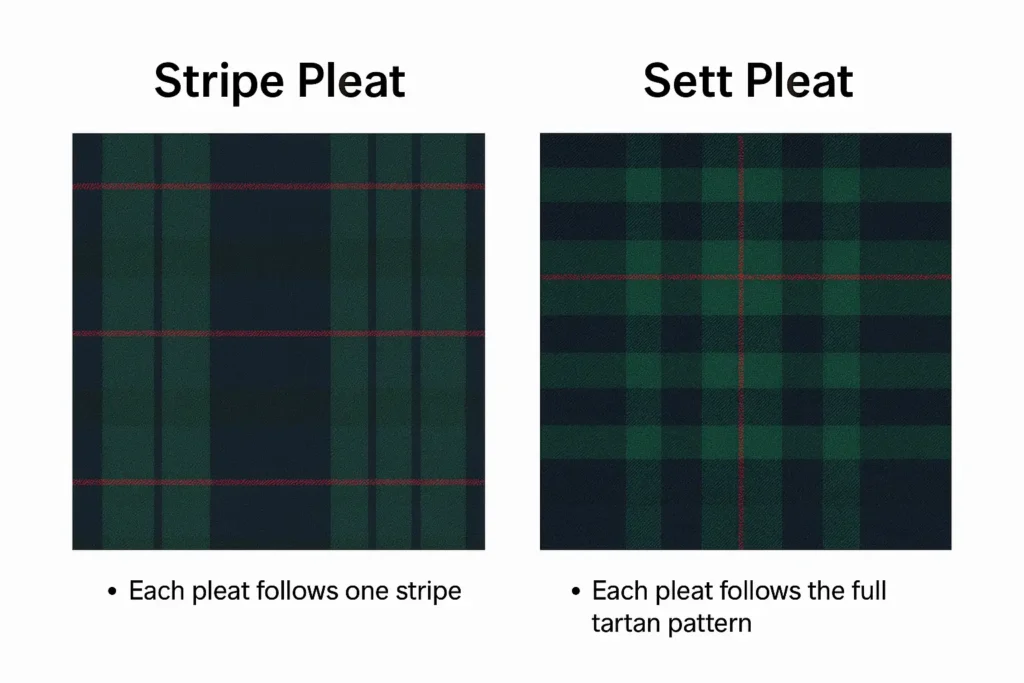
• Stripe pleats focus on one stripe.
• Sett pleats keep the full tartan pattern.
Which Should You Choose?
• Choose stripe pleats if you want strong lines and a cleaner pattern.
• Choose sett pleats if you want your whole tartan to stay true to its original design.
• Ask yourself: Do you want a simple repeat, or do you want the full pattern shown?
What Looks Better for Events?
• Formal events often favor sett pleating because it respects the original tartan look.
• Casual or workwear kilts often use stripe pleating for a sharper and more consistent design.
Quick Example
• Black Watch tartan: Pleated to the sett keeps the full green and navy block pattern.
• Pleated to the stripe highlights one dark stripe, giving the back a straight and repeatable line.
Your Decision Comes Down to One Thing
• Do you want the tartan as it is, or do you want a cleaner repeat at the back?