
Great Kilt VS Modern Kilt: Which One Is Right For You?
Great Kilt vs Modern Kilt: Which One Is Right for You?
Choosing between a great kilt and a modern kilt sounds simple at first. One is older, one is newer. One is traditional, one is practical. Easy, right?
But the more you think about it, the less neat the decision becomes.
Because this isn’t really about fabric alone. It’s about how you want to feel when you wear it. Comfortable, yes—but also connected. Or unburdened. Or maybe a bit dramatic, if we’re being honest. There’s no wrong answer here. Just different trade-offs.
Let’s talk through them, without pretending it’s perfectly clear-cut.
What Is the Great Kilt (Feileadh Mòr)?
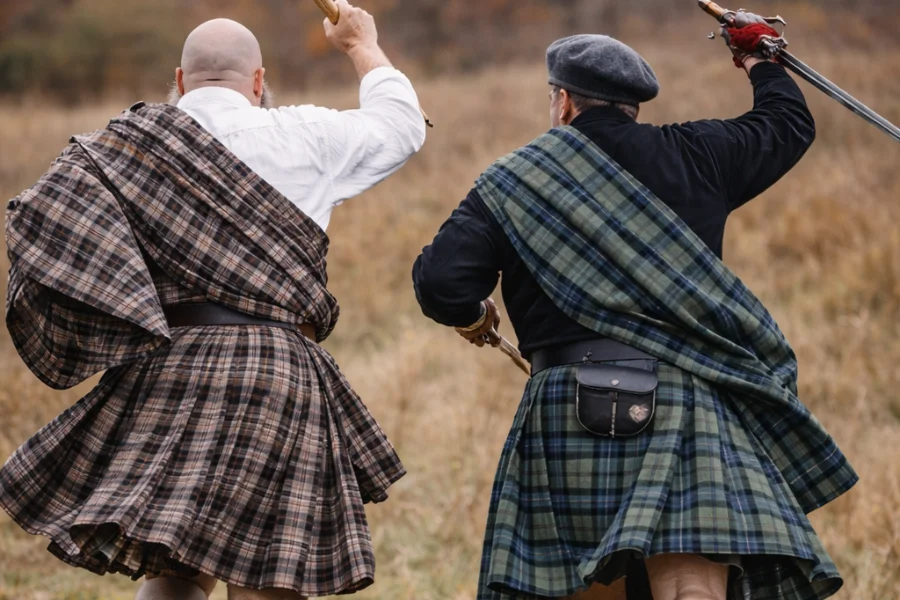
The great kilt, also known as the feileadh mor, is the original Highland garment. Not stitched. Not tailored. Just a long length of tartan wool—often six to eight yards—pleated by hand and wrapped around the body each time it’s worn.
That detail matters. A lot.
Because nothing about the feileadh mor is fixed. The pleats change slightly every time. The way it sits on your shoulder changes. Even the way it moves changes depending on weather, mood, or how much patience you had that morning.
Historically, the Scottish great kilt wasn’t ceremonial. It was daily clothing. It doubled as a cloak, a blanket, sometimes even shelter. Efficient, adaptable, and honestly a little demanding. You had to know what you were doing.
And maybe that’s why people still find it compelling.
What Is a Modern Kilt?
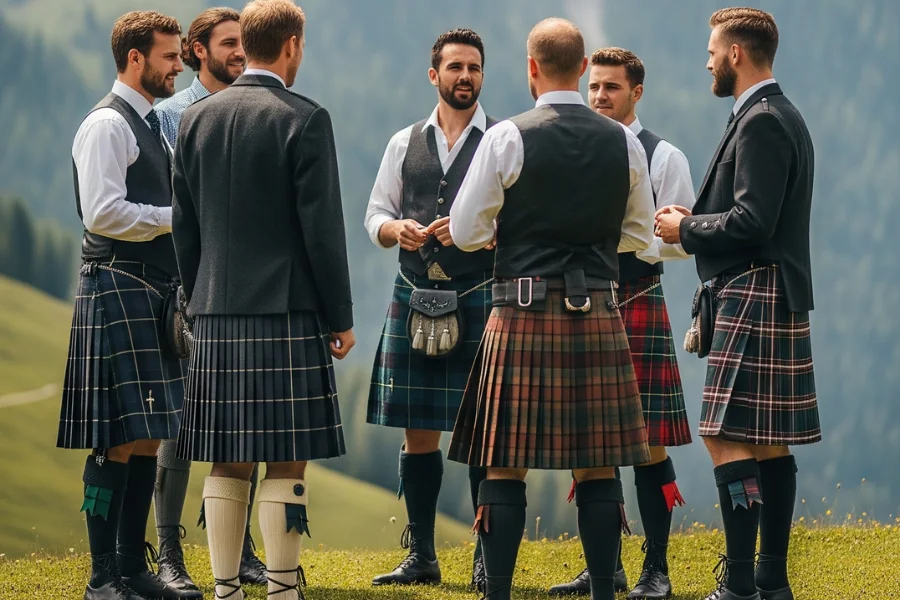
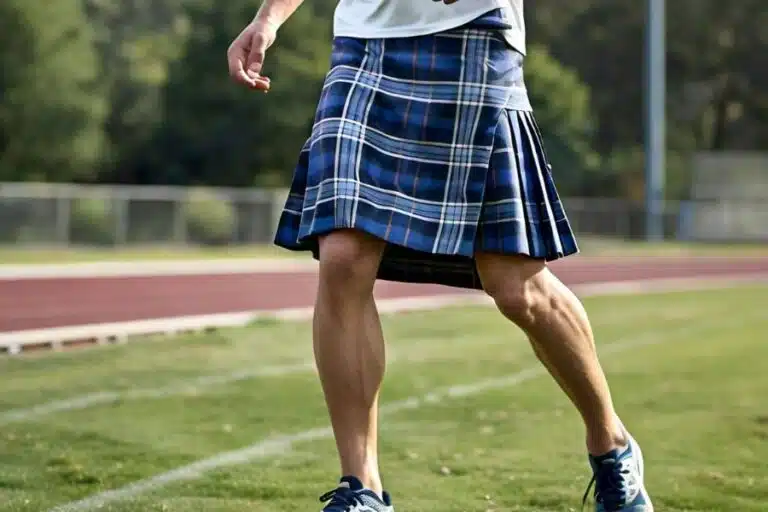
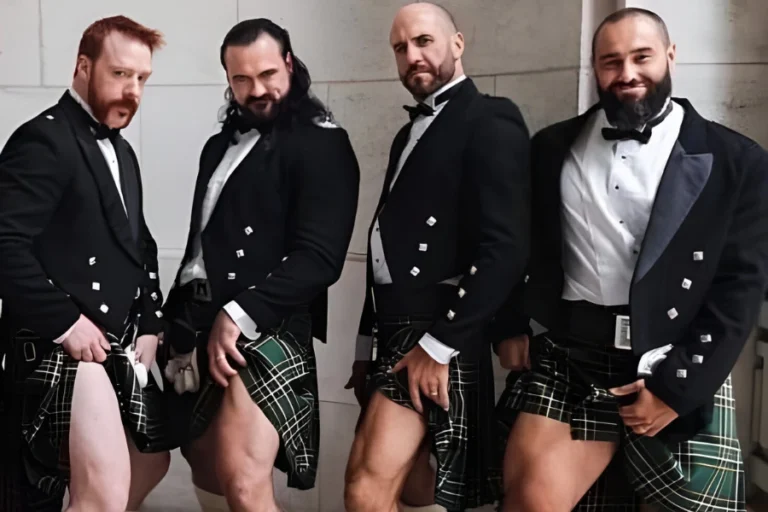
The modern kilt—often called the small kilt or feileadh beag—is what most people picture when they hear the word “kilt.” Sewn pleats. Waistband. Buckles. Consistent shape every time you put it on.
It’s easier. Faster. More predictable.
And that’s not a flaw. That’s the point.
Modern kilts evolved because people wanted something practical for everyday wear, military uniforms, formal events, and later, civilian life. You don’t need to lay it out on the ground. You don’t need to redo it if you mess up the pleats. It just… works.
Some purists feel conflicted about that. Others are relieved.
Wearing a Great Kilt: The Experience
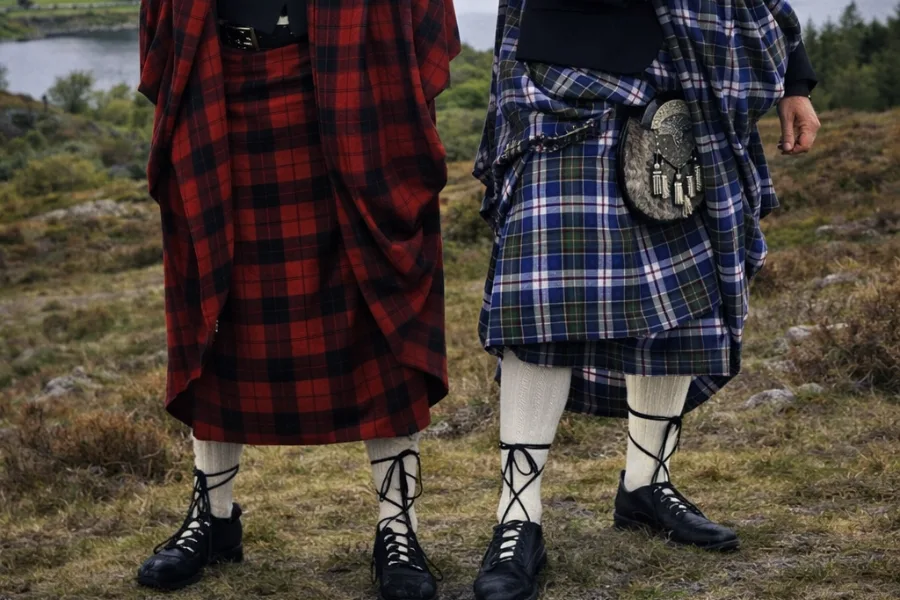
Wearing the great kilt is not passive. You participate in it.
You feel the weight of the wool. You’re aware of the fabric when you walk, sit, turn. You notice the weather more, because the garment responds to it. Wind matters. Rain matters.
At times, it’s incredibly satisfying. At other times, it’s mildly inconvenient.
I’ve heard people say they feel more grounded in a feileadh mor. More present. And I get that. But I’ve also heard people admit—usually quietly—that it can be annoying when you’re in a hurry or standing around unsure where to put the extra fabric.
Both things can be true.
Wearing a Modern Kilt: Ease and Consistency
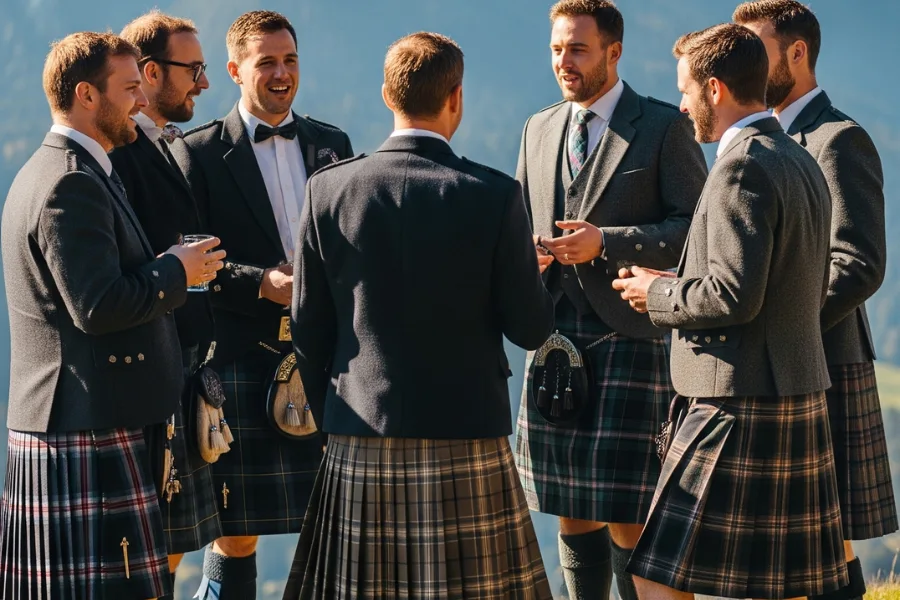
The modern kilt doesn’t ask much from you. You step into it, fasten it, and go. It looks the same every time, which is comforting in its own way.
If you’re attending a wedding, a formal event, or even just wearing a kilt casually, that consistency helps. You don’t have to think. You don’t have to adjust constantly.
And yes, some people find that less romantic. But romance isn’t always the goal. Sometimes you just want to enjoy the day without worrying about your pleats unraveling.
There’s no shame in that.
Tradition vs Practicality (It’s Not That Simple)
This is where comparisons usually get too tidy.
People say the feileadh mor is for tradition, and the modern kilt is for practicality. That’s mostly true—but not entirely. Plenty of people wear a great kilt today purely for aesthetic reasons. And plenty of modern kilts are worn with deep respect for heritage.
Tradition isn’t frozen. It shifts.
And practicality is subjective. What feels practical to one person feels restrictive to another. I think it depends on how much involvement you want from your clothing.
Great Kilt for Sale: Who Should Consider One?
If you’re browsing for a great kilt for sale, it’s worth asking yourself a few honest questions.
Do you enjoy learning techniques?
Are you comfortable adjusting your clothing throughout the day?
Do you like garments that feel slightly unpredictable?
If yes, a Scottish great kilt might suit you surprisingly well.
It’s especially appealing for reenactments, Highland games, outdoor ceremonies, or anyone drawn to older forms of dress that haven’t been overly refined.
That said, it’s not a “buy it and forget it” garment. It asks for attention. And time.
Who Is a Modern Kilt Better For?
If you want reliability, the modern kilt wins. Easily.
It’s ideal for frequent wear, formal events, rentals, or anyone new to kilts in general. There’s less to learn. Less to manage. Less room for error.
That doesn’t make it less authentic—it just makes it more accessible.
And accessibility matters if you actually want to wear the thing, not just admire it.
Cost, Fabric, and Commitment
Here’s something people don’t always mention: commitment.
A great kilt usually requires more fabric, heavier wool, and often a higher upfront cost. Not always—but often. You’re paying for material and tradition rather than tailoring.
A modern kilt, while tailored, can sometimes be more economical depending on fabric and construction.
But cost isn’t just money. It’s effort. Learning how to wear a feileadh mor takes time. Some people enjoy that. Others don’t.
Neither reaction is wrong.
So… Which One Is Right for You?
Annoying answer? It depends.
If you want history you can feel, something immersive and slightly demanding, the great kilt offers that. It’s expressive. Flexible. A little stubborn.
If you want something dependable, polished, and easy to live with, the modern kilt is probably the better choice. It lets you focus on the moment instead of the garment.
And here’s the part people don’t always say out loud: many kilt wearers end up owning both. For different moods. Different settings. Different versions of themselves.
That feels very human, actually.
Final Thoughts on the Great Kilt vs Modern Kilt
The debate between the great kilt and the modern kilt isn’t about which one is better. It’s about what kind of relationship you want with your clothing.
Hands-on or hands-off.
Fluid or fixed.
Old-world or streamlined.
You don’t have to justify your choice to anyone. Wear what makes sense for your body, your life, and—perhaps most importantly—your patience level that day.
Because at the end of it all, a kilt should be worn. Not just admired.