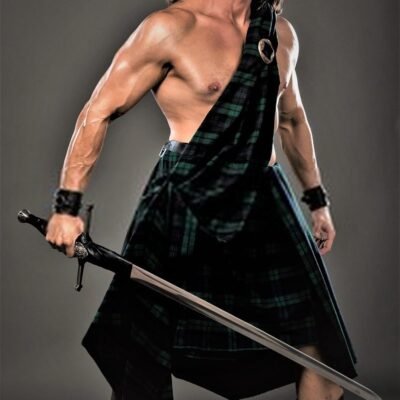
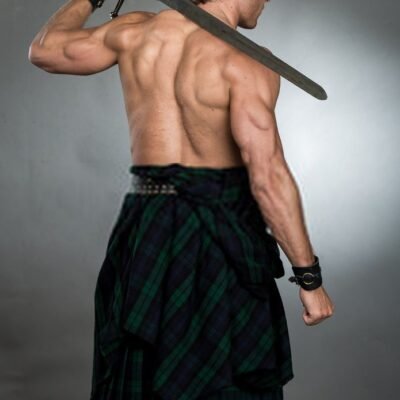
Black Watch Great Kilt
Original price was: $199.$109Current price is: $109.Black Watch Great Kilt
A great kilt is not a finished garment when you put it on. You make it finished. That part still feels a little strange to say, but it’s true. When you buy a great kilt for sale, you’re really buying a long piece of tartan that becomes clothing through your hands.
I remember the first time I tried one. It felt awkward. I folded it wrong. Then I folded it again. After a few tries, it started to make sense. Not perfect, but close enough to feel right.
Unlike a stitched kilt, the great kilt changes every time you wear it. Some days the folds are tight. Some days they are loose. Weather changes it. Mood changes it.
That’s part of the charm.
You don’t step into it. You build it.
A great kilt for sale gives you that freedom. You decide how high it sits. How deep the folds go. How much fabric hangs over the shoulder.
When you choose a great kilt for sale, you are getting:
Long tartan fabric made for wrapping
Edges finished to handle weight
Enough length to fold and belt
What you don’t get is a fixed shape. And honestly, that’s the best part.
Every time you wear it, it looks a little different. Maybe better. Maybe just different. But always yours.
Showing all 7 results
Black Watch Great Kilt
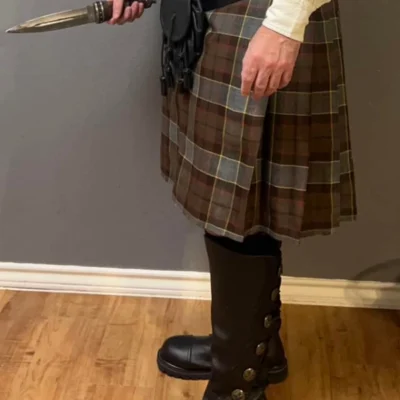
Jamie Fraser Outlander Kilt

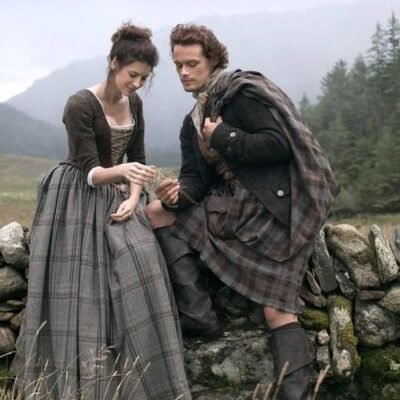
Yardage Guidelines (By Waist Size)
Small (34–42 inch waist): Approximately 4–5 yards of fabric.
Medium (42–48 inch waist): Approximately 6 yards of fabric.
Large (48+ inch waist): 7 yards or more to achieve a fuller wrap.
Key Considerations:
Fabric Width: Great kilts use double-width fabric (typically 54–60 inches wide), meaning fewer yards are needed to cover the body compared to modern kilts.
Desired Fullness: More fabric creates deeper pleats, a heavier drape, and a more dramatic, historically authentic appearance.
Personal Preference: The final yardage can be adjusted based on your preferred balance of volume, weight, and historical accuracy.
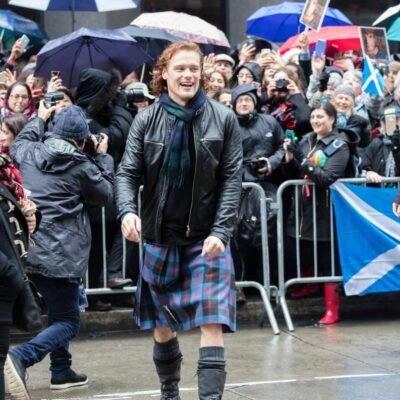
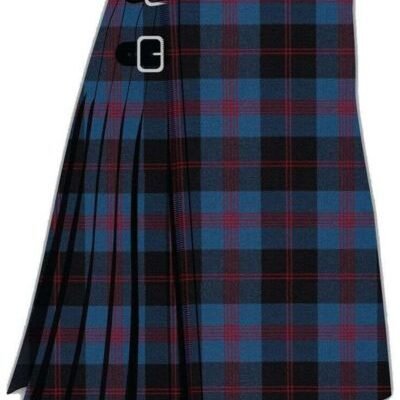
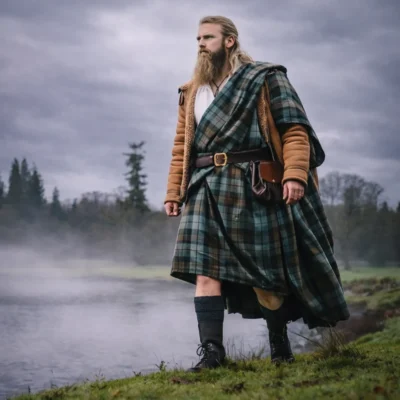
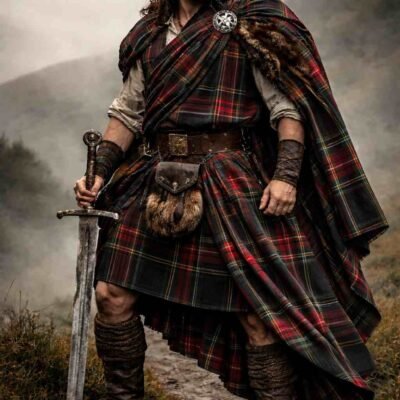
Authentic The Great Kilt – 100+ Tartan Options
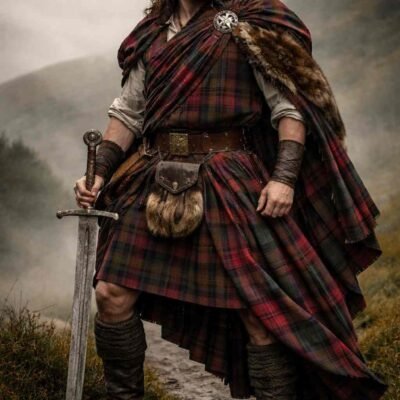
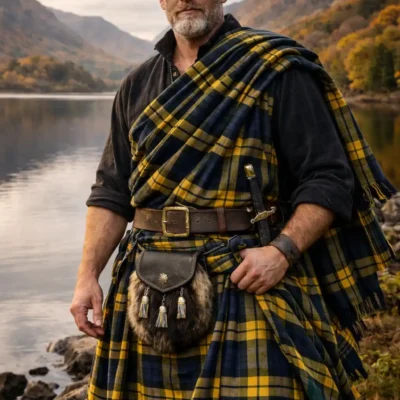
Traditional Great Kilt – 1,000+ Clan Tartans Available
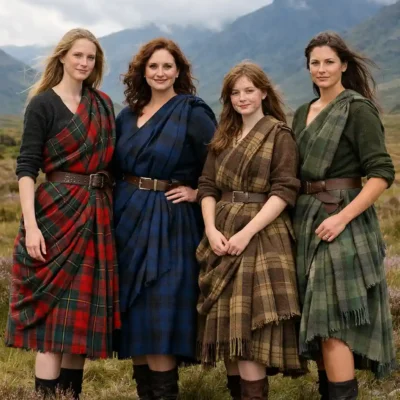
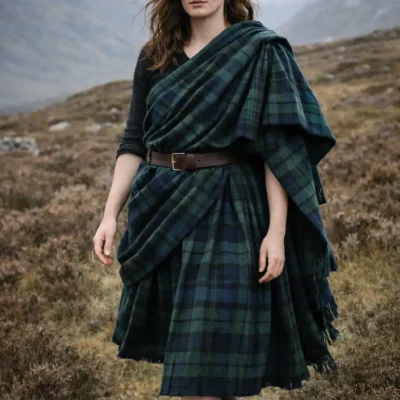
A Traditional Piece with a Strong, Feminine Presence A Women’s Great Kilt has a kind of presence that is difficult to fake. Some garments are attractive because they are simple. This one is not simple, at least not visually. It has movement, structure, weight, and a sense of history that you can notice almost immediately….
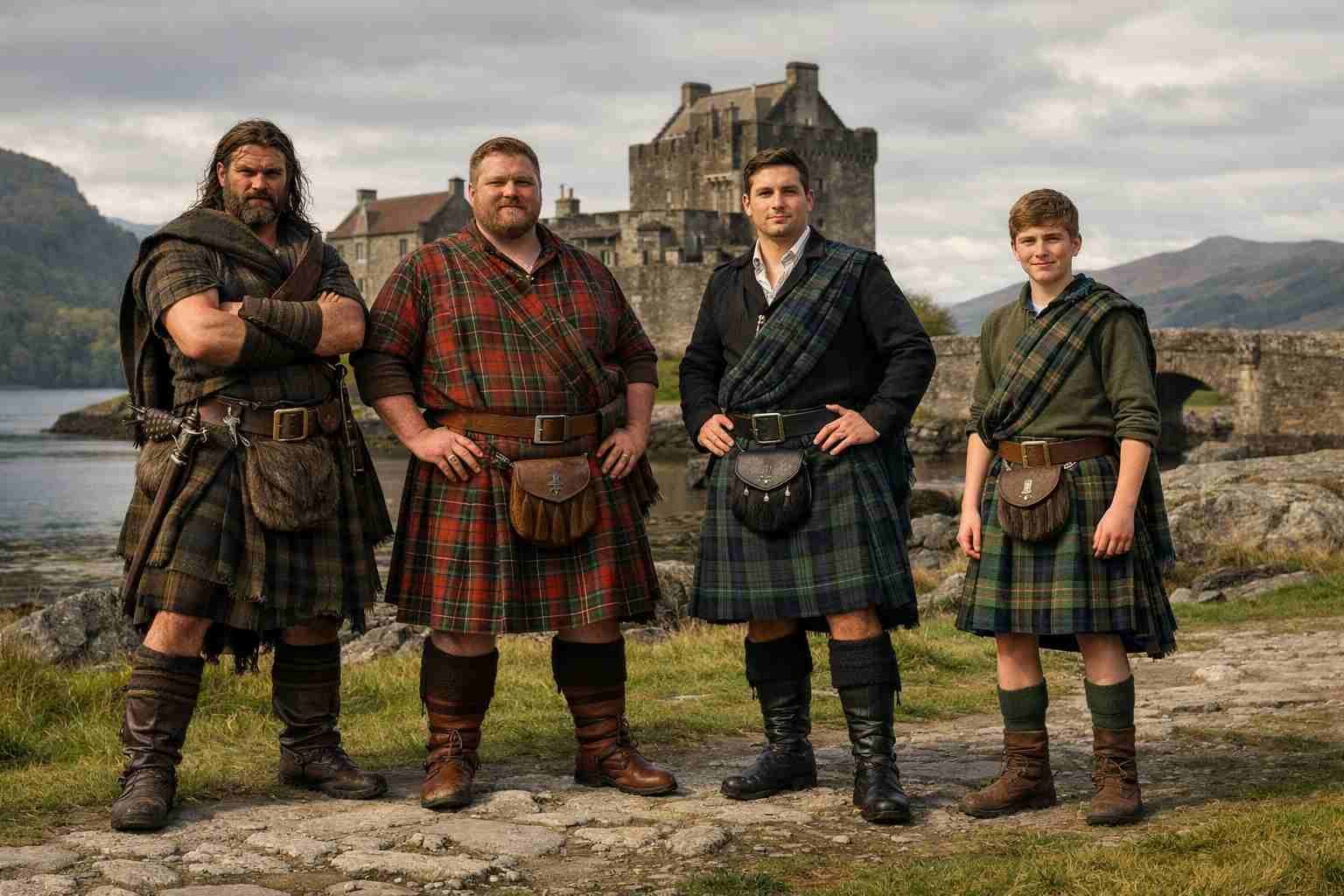
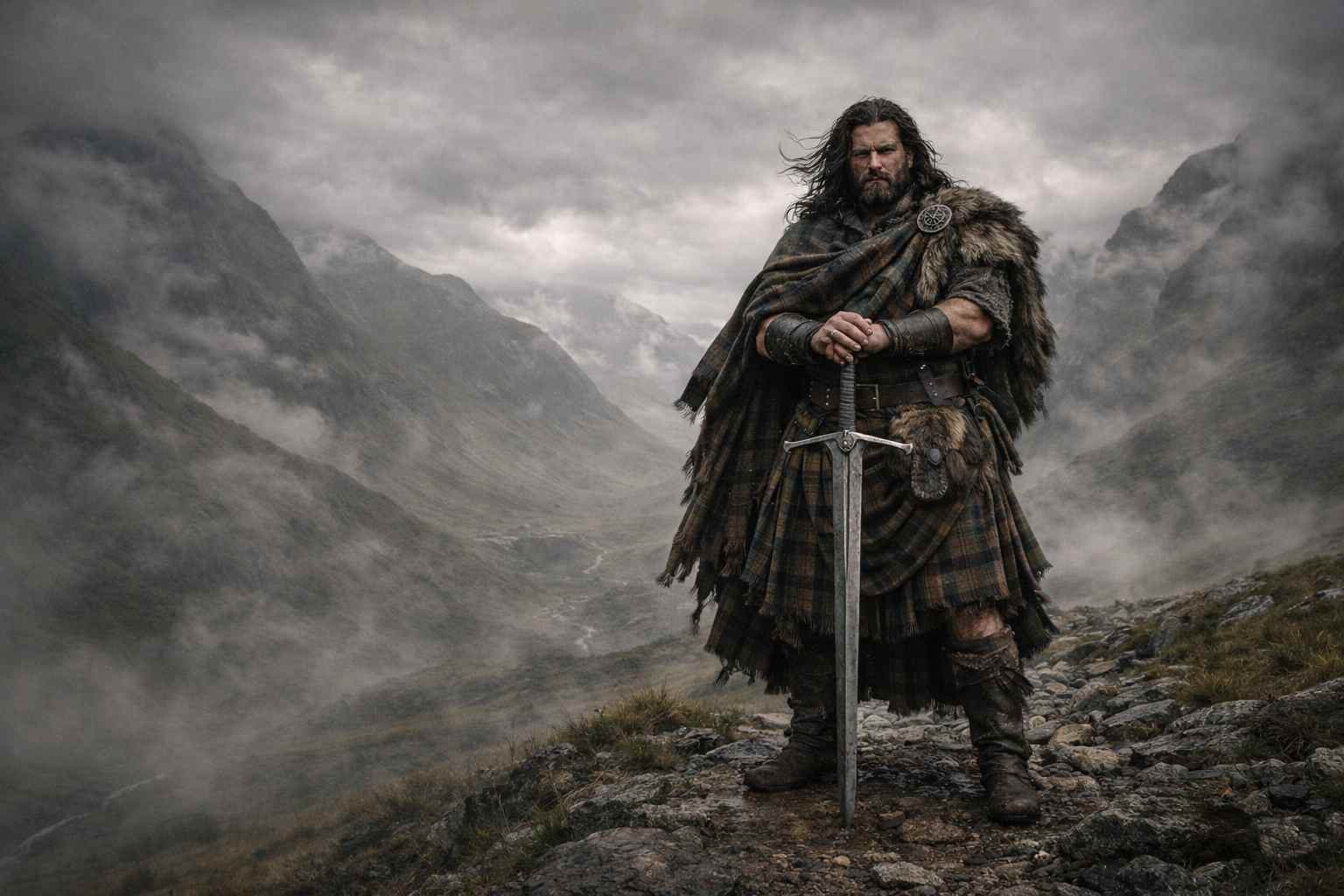
The great kilt is the original Scottish kilt, made from a long piece of tartan fabric wrapped around the body and over the shoulder.
It usually depends on your height and waist, but most great kilts use between 4 to 8 yards of fabric.
Yes. A modern kilt is tailored and stitched, while the great kilt is wrapped and pleated by hand each time you wear it.
Yes—many people wear Scottish great kilts for traditional or themed weddings.

This great kilt feels real—not like a costume. The fabric drapes beautifully.
Wore it to a Highland festival and got nonstop compliments.
Exactly what I wanted: proper Scottish great kilt style.
The great kilt, or the belted plaid, feels like the beginning of everything. Before tailored kilts with sewn pleats, there was this long piece of cloth that people wrapped, folded, and shaped by hand. It sounds simple. It isn’t.
I remember the first time I saw someone wear a great kilt in real life, not on a screen. It looked heavy. Dramatic. A little wild, maybe. The fabric moved when he walked, not like trousers, not even like a modern kilt. More like a cloak that decided to become clothing.
That’s what makes the great kilt different. It isn’t stitched into one shape. You make the shape each time you wear it.
The great kilt is a long length of tartan fabric, often around 4 to 6 yards. Sometimes more. You don’t just pull it on. You lay it out, fold it, lie down on it, wrap it, belt it.
It’s called many things.
Great kilt
The great kilt
Belted plaid
Great Highland kilt
Traditional great kilt
All of them point to the same idea. A large tartan cloth that becomes your clothing through folding and belting.
No fixed pleats. No sewn waistband. Just fabric, a belt, and your hands.
Some people buy one for history. Others for festivals. Some because they saw it in a film and thought, I want that.
There’s something honest about it. You don’t just wear it. You build it.
Each time you fold a great kilt, it looks a little different. Maybe your pleats are tighter today. Maybe looser. Maybe the weather makes you wrap it higher.
That’s part of the appeal. It doesn’t lock you into one shape.
When you see a great kilt for sale, you’re not buying a finished garment. You’re buying potential.
You get:
Long tartan fabric
Correct width for wrapping
Length based on great kilt size
Edges finished for strength
What you don’t get is a fixed form. That part is up to you.
Some people love that. Some feel nervous about it at first. I think that nervous feeling fades once you try folding it a few times.
Great kilt size isn’t like waist size. It’s more about your height and how you want to wear it.
Shorter people may want less length so the fabric doesn’t drag.
Taller people often need more length for full wraps.
Most great kilts range between 4 and 6 yards. Some go longer.
If you want more dramatic folds, go longer.
If you want lighter wear, go shorter.
There’s no perfect rule. You learn what feels right after wearing it once or twice.
A Scottish great kilt usually uses traditional tartan. Clan tartans. Regional tartans. Sometimes modern ones too.
The pattern matters more here than in a sewn kilt. Because the fabric shows in layers. Over the shoulder. Down the front. Across the back.
Busy tartans look bold.
Simple tartans feel calmer.
I think both work. It just depends on your mood. And where you’re wearing it.
Great kilt fabric needs weight. Not too heavy. Not too light.
Too light, and it slips.
Too heavy, and it becomes tiring.
Wool blends work well. Pure wool works too, if you don’t mind the weight.
Good fabric:
Holds folds
Doesn’t slide easily
Feels solid when belted
Cheap fabric often looks fine but won’t behave when you try folding a great kilt.
This part scares people. It shouldn’t, but I get why it does.
You lay the fabric flat.
You create pleats by hand.
You lie down on it.
You wrap it around.
You belt it.
That’s it. Sounds strange, but it works.
The first time might look messy. Second time, better. By the third or fourth, your hands remember what to do.
There’s no single correct fold. That’s something people argue about, but honestly, history shows many styles.
You can’t really wear a great kilt without a belt. The belt holds everything together.
A great kilt belt is wide. Strong. Usually leather.
It needs to:
Grip the fabric
Hold weight
Stay tight when you move
Some people add a second belt. One for support, one for look. Not required, but it can help.
A great kilt cheap sounds good. Sometimes it is. Sometimes it isn’t.
Cheap ones often:
Use thin fabric
Have weak edges
Lose shape fast
But not all lower-priced great kilts are bad. Some are made simple, without extras, which keeps cost down.
Just don’t expect heavy wool and perfect finish at a very low price.
The traditional great kilt was worn for work, travel, and war. It could be a blanket at night. A cloak in rain.
Today, most people wear it for:
Festivals
Reenactments
Weddings
Events
Photos
It still works as a cloak. I’ve tried it. It’s warm. Heavy, but warm.
The great Highland kilt often means the older style, not the tailored one. This is the one wrapped and belted.
You can wear it:
With shirt and waistcoat
With simple tunic
With bare chest, if you want
It changes mood based on what you pair it with.
The belted plaid great kilt shows more fabric than any other kilt style. Over the shoulder, across the chest, down the back.
It looks big. Bold. Almost theatrical.
Some love that. Some feel it’s too much. I think it depends on the setting.
At a casual event, it can feel heavy.
At a formal or themed event, it feels right.
You don’t need to live in the Highlands to wear one. You just need patience.
You will get questions. People will stare. Some will ask how you made it. Others won’t know what it is, just that it looks different.
And maybe that’s the point.
You’re not wearing something mass-made. You’re shaping it yourself. Each time.
That makes the great kilt feel alive. Not fixed. Not final.
Just fabric. Belt. Hands. And a bit of time.
And maybe that’s enough.
The Great Kilt, also known as the belted plaid, is a traditional Scottish garment made from a long length of cloth. Unlike a modern stitched kilt, it must be folded, pleated, wrapped, and belted by hand. Here is the simple step-by-step method to wear it properly.
Spread the Great Kilt out fully on a flat surface or on the ground. Make sure the fabric is laid straight so it is easier to fold and pleat evenly.
Before making pleats, leave a flat section of fabric at both ends. These flat parts will form the front aprons when the kilt is wrapped around the body.
Start folding the center section of the fabric into pleats by hand. Keep the folds as even as possible. If the cloth has visible lines or stripes, they can help guide the pleats and keep them neat.
Once the pleats are finished, make sure the center is fully pleated and both ends remain flat for the aprons. The two apron sections should look roughly even.
Place a belt underneath the pleated section. This belt will hold the Great Kilt in place once it is wrapped around the waist.
Carefully lie down on top of the kilt with the pleated section behind your waist. Position the fabric so the lower edge sits just above the knees.
Take the right apron and fold it across the front of the body.
Bring the left apron across the front, over the right side. This creates the outer front layer of the Great Kilt.
Pull the belt around the waist and fasten it securely. The belt should be tight enough to hold the kilt in place comfortably.
Stand up carefully and check the fit. The Great Kilt should hang evenly, with the pleats at the back and the front aprons sitting neatly at the front.
Adjust any loose folds or uneven flaps at the front and sides. Tuck in extra fabric where needed to make the overall look cleaner.
Once the Great Kilt is secure, you can add accessories such as a sporran or an outer belt if desired.
One of the main features of the Great Kilt is the extra upper portion of fabric, which can be styled in different ways.
Take the upper section from the back and drape it over one shoulder. This is one of the most traditional and recognizable ways to wear a Great Kilt.
The upper part can also be left hanging down naturally for a simpler and more relaxed look.
In colder weather, the extra cloth can be wrapped around the upper body for additional warmth and protection.
If needed, the fabric can also be pulled over the head as a covering in cold or harsh weather.
Keep the pleats as even as possible for a neater appearance.
Make sure the belt is strong and secure.
Check that the kilt sits just above the knees.
Use a flat surface to make folding and pleating easier.
Adjust the front folds after standing for a cleaner finish.
Wearing a Great Kilt is a simple process when broken into clear steps. First, lay it out, pleat the middle, place the belt, wrap both sides, fasten it, and adjust the fit. After that, the upper part can be styled in different ways depending on the look or weather.
No products in the cart.
